Essilor Kappa User Manual
Edging & MountingProvide best-in-class technologies for your workshopAs you are dedicated to provide the best products and services to your patients, Essilor Instruments is committed to develop the best in class technologies to secure accurate, aesthetic and perfectly fitted mounting. Our systems give access to different levels of finishing, speed, range of shapes and automatisms. They have been also designed to be networked to answer different workshop organizations and secure in-practice data exchange.
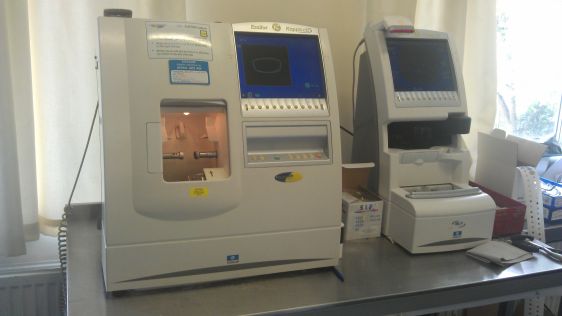
Everything you need from a perfect tracer. Binocular tracing of all shapes, even the most intricate and high curved; Optimal rim contact without frame deformation ensured by patented tilted stylus.
.User Manual. C ANUAL ONTENTS ONTENTS NTRODUCTION I. F IRST STEPS WITH EKSIA 1. Descriptive diagrams 2. Connection to an edger 3. Using the tracer-centerer-blocker a.
Turn on and turn off the tracer-centerer-blocker b. Using the touch screen and keypads c. Work screen II. C ANUAL ONTENTS b. Block the lens IV. M ODIFYING THE LENS SHAPE 1. Menu screen 2.
Modifying a shape a. Enlarging, reducing or rotating a shape b. Free-form modification c.
Retouching a shape 3. Archiving / saving a shape V.
C ANUAL ONTENTS ECHNICAL DATA 1. Tracer-centerer-blocker 2. Environment ENERAL INFORMATION 1. Modifications 3. Declaration of conformity 4.
Materials and products 6. Safety instructions: 7. Electromagnetic waves LOSSARY. the user manual, present on the CD-ROM The screens may vary according to the edger connected to the tracer-centerer-blocker. This documentation was produced with a connection to the Neksia edger. Neksia v1-02-14. I ANUAL NTRODUCTION Neksia v1-02-14.I.
F IRST STEPS WITH EKSIA.1. D ESCRIPTIVE DIAGRAMS This section contains the descriptions and list of accessories of the tracer-centerer-blocker: Screen Blocking arm Centering chamber Tripod Tracing table ON/OFF button Connectors Manufacturer plate RS232 (edger) port Barcode reader port Neksia v1-02-14.2. C ONNECTION TO AN EDGER To connect the tracer-centerer-blocker to an edger, use the RJ45 cable (Neksia/Mr Orange edgers) or RS232 cable (Jess/Jessie /JessD/Kappa edgers) provided with the edger. For the RS232 cable, refer to the labels indicating the direction of connection.During a prolonged period of non-use (several days), it is preferable to turn off the tracer-centerer- blocker by unplugging the mains power supply. Using the touch screen and keypads Using the touch screen Use the stylus on the touch screen. You can also touch the screen with your finger. Neksia v1-02-14.Reset the fields.
Back. Confirm. Cancel and go back to the work screen. The alphanumeric keyboard is displayed for storing, calling and searching for jobs.
& &. Job reference (alphanumeric characters) Neksia v1-02-14.Settings Devices connected Active eye and information on the shape Work area Function buttons Actions available for the current screen Detailed functions For more information, consult the section Perform a trace Tracing environment Captioned screen. P.40) Neksia v1-02-14.II. T RACING.Menu screen Dimensions display ◦ A: A-dimension ◦ B: B-dimension ◦ D: D-dimension ◦ E: Greater radius from the boxing center ◦ P: Perimeter Function buttons ◦ Tracing ◦ Centering Neksia v1-02-14.For mechanical tracing of demo lenses, recut lenses or patterns, the tracer automatically detects the pattern holder inserted in the tracing table.
New Job For more information on jobs, refer to the section Tracing Shape management and storage & p.22) Tracing cycle initialization Neksia v1-02-14. tracing - tracing - preparing edging - centering mode The selected work mode is shown in the information bar, to the left of the Essilor logo. You can change it in the tracer settings.
Working in tracing - centering - preparing edging mode At the end of a tracing, the tracer-centerer-blocker displays the centering screen automatically then the edging preparation screen.You can perform several tracings in succession. The tracings are saved under the job number that you have assigned to them. Shape modification, edging preparation, centering and blocking are processed later.
All jobs must be saved. Neksia v1-02-14.In tracing - centering mode, the centering screen is displayed at the end of the tracing: Select then to access the tracing screen.
The monocular view is displayed by default. Press to display the binocular view. Neksia v1-02-14.
The binocular view is displayed. Position the frame in front of the screen, against the faceplate to check its shape and centering. Press to return to the monocular screen.
Neksia v1-02-14.Sort the jobs ◦ ◦ Reference ◦ Date ◦ Types of jobs: ◦ Drilled ◦ Asymmetric tracings ◦ Creative shapes Selected job Select the eye to be displayed in the preview Neksia v1-02-14.Delete the selected job(s) Press to delete the selected job(s). A confirmation message is displayed.
Search for a job by ID or by reference Rename the selected job Duplicate the selected job Call the selected shape to the work area Neksia v1-02-14.Manufacturer, etc. Press on to confirm. The tracing screen is displayed, the allocated ID appears in the information bar.
The tracer-centerer-blocker is ready for tracing. For further information, refer to the section concerning your job type. Neksia v1-02-14.The alphanumeric keypad is displayed. For more information on entry and use of the keyboard, refer to the section First steps Using the tracer-centerer-blocker Using the touchscreen and keypads p.12) Press to select the ID field. & Neksia v1-02-14.
monocular tracing to cut only one lens of a rimmed frame Place the frame in the tracing table, between the two clamps located opposite you. Gently close the jaw to hold the frame. Neksia v1-02-14.Put the frame in place and start the tracing When you place the frame in the tracing table, position the eye as flat as possible: the black grips which hold the eye to be traced must be in the middle of the circle. Neksia v1-02-14.The numeric keypad is displayed.
Enter the value of the D-dimension, then press to confirm. Once the tracing of the first eye is finished, a message is displayed: Position the frame to trace the second eye. Neksia v1-02-14.You can also press for a few seconds on the value and change it using the numeric keypad. The value of the curve angle is modified. Neksia v1-02-14.Prerequisite: for the tracer to correctly detect the horizontality of the lens, the lens must be clean and marked using the permanent felt tip marker with:. either three focimeter dots,. or a horizontal line which must not touch the edges of the lens (a space of at least 5 mm is required) Neksia v1-02-14.
The numeric keypad is displayed. Enter the D-dimension value, then press to confirm. The drilling screen is displayed. Configure the drilling settings if necessary. Neksia v1-02-14.
add drilling to the shape. For more information, refer to the section Preparing a drilled job p.73) b. Mechanical tracing Detailed view of the pattern holder Front tab Neksia v1-02-14.Press on the knurled knob, screwing it, until the pattern is immobilized (as for fixing a lens). The pattern is clamped. Screwing of the knurled knob inside the tip posiblock has no functional impact on the latter.
Neksia v1-02-14.(next to you - see illustration below). Check that the pattern holder does not move in the table. Tracing Press to start mechanical tracing.
To interrupt tracing at any time, press The tracer automatically detects the pattern holder. Neksia v1-02-14.Prerequisite: before entering the curve angle and frame base, one of the following operations must be performed:. Optical tracing of a pattern, a demo lens or a recut lens p.30). Mechanical tracing of a pattern, demo lens or recut lens p.32) Neksia v1-02-14.
the bridge of the frame superimposed on the base line. Use the buttons to align the light blue lines with the nasal and temporal ends of the circles. Neksia v1-02-14.The value is displayed in red. Use the buttons to modify the frame base value. You can also press for a few seconds on the value and change it using the digital keyboard. Press on to confirm.
Neksia v1-02-14. II. T ANUAL RACING Neksia v1-02-14.III. C ENTERING.Job call p.42). Using the tripods p.43). Centering modes p.43). Centering help p.44) a.
Menu screen Centering screen indicator Blocking mode ◦ Blocking in the boxing center & ◦ Blocking in the optical center Neksia v1-02-14.Entering the curve angle and frame base Lens type selection ◦ Single vision lens & ◦ Progressive lens & ◦ Bifocal lens & ◦ Executive lens & ◦ Mid-distance lens & Value modification Enables you to reduce or increase the previously selected value. Neksia v1-02-14. A warning message is displayed. Press to replace the job displayed by the job called. Press to cancel: the job is not transmitted to the tracer. The shape is displayed in the centering screen.
Neksia v1-02-14.You can adjust the spacing of the studs to ensure better lens stability. ITH THE STANDARD TRIPOD ITH THE RECUT LENS TRIPOD d. Centering modes The centering modes available depend on the type of lens selected. Always refer to the specific procedure for your type of lens. Neksia v1-02-14.Prerequisite: micro-engravings must be re-marked with the felt-tip pen. The diameter of the dots must be between 0.5 and 1.5 mm.
We advise you to use the white felt tip marker supplied with the tracer-centerer-blocker to mark the lens. Neksia v1-02-14.Enter the half PD and pupillary height. The target moves. Ensure that the tripod is within the centering chamber. Use the recut lens tripod (option) for a high base lens, a recut lens or a decentered lens (option). Neksia v1-02-14. The indicators are displayed in green.
The lens is centered and ready to be blocked. Three focimeter dots Micro-engravings To carry out lens blocking, refer to the section Lens Centrering Blocking a lens p.61) Neksia v1-02-14. Remark the micro-engravings with the marker; the points must have a diameter ranging between 0.5 and 1.5 mm. We advise you to use the white felt tip marker supplied with the tracer-centerer-blocker to mark the lens. Neksia v1-02-14.Enter the half PD and pupillary height. The target moves.
Paris, France
Ensure that the tripod is within the centering chamber. Use the recut lens tripod (option) for a high base lens, a recut lens or a decentered lens (option). Neksia v1-02-14. aligned on the line corresponding to the PRP of the lens. The PRP value of Essilor progressive lenses is 4 mm. This may vary depending on the manufacturer of the lenses.
The lens is centered and ready to be blocked.The lens must at least have the following markings: Far vision mark Centering marks Centering the lens Press to select the type of progressive lens. The centering target is displayed: Enter the half PD and pupillary height. The target moves. Neksia v1-02-14.Perfectly centered in the centering cross,.
Parallel with the horizontal lines. The lens is now centered and ready for blocking. To carry out lens blocking, refer to the section Lens Centrering Blocking a lens p.61) Neksia v1-02-14.This section describes the centering procedure for a bifocal or trifocal lens with a straight, curved or round & segment. Description of the centering target Centering cross (orange cross) and the boxing center of the shape (blue cross) Near vision mark Centering marks Neksia v1-02-14.The target moves. Ensure that the tripod is within the centering chamber.
Use the recut lens tripod (option) for a high base lens, a recut lens or a decentered lens (option). Position the lens on the tripod. Neksia v1-02-14.Prerequisite: the lens must be marked using a focimeter. The three focimeter dots must be:. aligned,. at the same distance from the central dot,.
0.5 to 1.5 mm in diameter. Description of the centering target Centering mark Neksia v1-02-14.The target moves. Ensure that the tripod is within the centering chamber.
Use the recut lens tripod (option) for a high base lens, a recut lens or a decentered lens (option). Position the lens on the tripod.
Neksia v1-02-14.Description of the centering target Centering cross (orange cross) and boxing center of the shape (blue cross) Centering graduated marks The horizontal line is situated at 6mm enabling you to measure the PRP distance. Neksia v1-02-14.Centering the lens Press to select the type of mid-distance lens. The centering target is displayed: Enter the half PD and the frame height. The target moves. Ensure that the tripod is within the centering chamber. Neksia v1-02-14.
aligned on the line corresponding to the PRP of the lens. The PRP value of Essilor mid-distance lenses is 6 mm. This may vary depending on the manufacturer of the lenses. The lens is centered and ready to be blocked.The lens must at least have the following markings: Centering cross Centering marks Centering the lens Press to select the type of mid-distance lens.
The centering target is displayed: Enter the half PD and the frame height. Neksia v1-02-14.Perfectly centered in the centering cross,. Parallel with the horizontal lines. The lens is now centered and ready for blocking. To carry out lens blocking, refer to the section Lens Centrering Blocking a lens p.61) Neksia v1-02-14.Centering an executive lens p.54). Centering a mid-distance lens p.56) 8.
B LOCKING A LENS This section describes the procedures for lens blocking depending on the selected option:. Blocking preparation p.62). Blocking with the automatic arm p.63) Neksia v1-02-14.18x14 mm posiblock Magnet The posiblocks and their corresponding pads are supplied with the edger. Always use Essilor pads: they are specially designed to ensure the performance of your machine for quality jobs.
The pads are non re-usable.The adjustments made to the PD, pupillary height, type of lens and type of centering are displayed by default for the second lens. Center and block the second lens. The edging preparation screen is displayed automatically. Consult the chapter Preparing lens edging p.87) Neksia v1-02-14. III. C ANUAL ENTERING Neksia v1-02-14.IV.
M ODIFYING THE LENS SHAPE.(yellow) Limit of the drilling zone ◦ (red) Non-machinable shape ◦ (blue) Reference drilling points Binocular view Half PD and pupillary height Active eye The selected eye has an orange frame around it. D-dimension modification A-dimension modification Neksia v1-02-14.Both lenses are modified simultaneously.
Enlarging, reducing or rotating a shape The side panel on the right of the screen enables you to:. Modifying each dimension or half-dimension separately. Modifier the size of a shape as a whole Neksia v1-02-14.You can also press for a few seconds on the corresponding value to display the numeric keypad: enter a new value and press to confirm. The shape is modified.
The original shape is displayed in light red. Neksia v1-02-14. Press once to cancel the last modification made to the shape. Press twice consecutively to return to the original shape.
Once the shape is modified, press to save and go back to the centering screen. Neksia v1-02-14.
Press once to cancel the last modification made to the shape. Press twice consecutively to return to the original shape. Once the shape is modified, press to save and go back to the centering screen.
Neksia v1-02-14.The types of retouch available vary according to the size of the selected area. Retouch to create a straight line. Retouch to create a curve.
Retouch to create an angle. The selected area is retouched. The original shape is displayed in light red. Neksia v1-02-14.You can also give it a different ID. Enter a reference for the shape to be saved. Press on to confirm.
The shape is archived in a new job with a new ID and is displayed in the shape modification screen. Neksia v1-02-14.V. P REPARING A DRILLED JOB. Neksia RC. Neksia Drill (with drilling function).
Photo mode To prepare a drilled job from a mechanically traced shape, proceed as follows: On the centering screen, position the demo lens within the centering chamber so that the shape and the demo lens coincide as far as possible.For more information on drilling settings, consult the section Preparing a drilling job Configuring a drilling point p.78) 1. L EGEND SCREEN The drilling screen is accessible:. from the centering screen (press briefly on.
from the edging settings screen (long press on Neksia v1-02-14.X and Y coordinates in relation to the boxing center of the shape. & ◦ Distance between the center of the drill-hole entrance point and the edge of the lens.
◦ X and Y coordinates in relation to the reference drilling point. Neksia v1-02-14.Archive the shape and create a new job based on the job displayed Back to the centering screen ◦ Press to save the changes and return to the centering screen. ◦ Press to return to the centering screen without saving the changes. Neksia v1-02-14.The drilling coordinates are displayed on the right of the work screen; Press to copy the drilling points from the nasal area to the temporal area and vice-versa. On the tracer-centerer-blocker, you can configure up to 6 drilling points per side (nasal and temporal) of a shape.
Neksia v1-02-14. The numeric keypad is displayed. You can also use the buttons to decrease or increase the selected value. Enter the new value of the parameter and press to confirm. The drilling point has been modified. Neksia v1-02-14.The drilling coordinates are those of its entrance drill-hole.
For a drill-hole, it is the center. For a slot and a notch, the entrance point is always on the side which is furthest away from the edge of the lens: Neksia v1-02-14.If you need to modify several drilling points simultaneously, you can group them together provided they are on the same side of the shape (nasal side / temporal side). By default, the symbol is displayed: each drilling point can be modified individually. Neksia v1-02-14.You can position each drilling point in relation to the reference drilling point by modifying the values in the columns:. X coordinates in relation to the reference drilling point. Y coordinates in relation to the reference drilling point Neksia v1-02-14.Select the desired list. The drilled jobs in the selected list are displayed.
Select the desired job as a drilling model. The model is displayed in the preview. Press to confirm import of the model. Neksia v1-02-14.The distance from reference drilling points in relation to the edge of the lens (other drillings, in relation to reference drilling) Press to save the job and its drilling points.
The job-creation alphanumeric keypad is displayed. Neksia v1-02-14.The new job with the new ID is displayed on the drilling screen. Press to return to the centering screen. You can go back to the previous job via the shape management screen if it has an ID. Neksia v1-02-14.
V. P ANUAL REPARING A DRILLED JOB Neksia v1-02-14.VI. P REPARING LENS EDGING.Medium/High index plastic lens - index 1.5 ◦ Trivex lens ◦ Glass lens ◦ Lens material to be defined on the edger The configuration of the edging cycles depends on the type of material. An incorrect choice may result in material damage.
Neksia v1-02-14.◦ Thin chamfer front surface ◦ Thick chamfer front surface ◦ No chamfering ◦ Chamfer to be defined on the edger Rear surface chamfering ◦ Thin chamfer front surface ◦ Thick chamfer front surface ◦ No chamfering Neksia v1-02-14. When you call the shape from the edger, its edging settings will be automatically recovered. Neksia v1-02-14.VII. T RACER CENTERER BLOCKER CONFIGURATION.Date Use the arrows to set the date. Type of date display Select the type of display out of the available formats.
Language Select the flag corresponding to your language. Other languages Neksia v1-02-14.Screen example: Optical tracing activated not activated by default. Option available until the date indicated Job memory activated activated by default. Connection to Mr Orange activated not activated by default.
High-base tracing and remote lens edging not activated Neksia v1-02-14.If necessary, first activate the connection to the Tess tracer via the customization screen. To do this, refer to the section Configuring the tracer Customizing the tracer-centerer-blocker Work modes and display precision p.97) To access the configuration menu for the connection from the work screen of your tracer-centerer-blocker, select Neksia v1-02-14.Screensaver and brightness of the work area This menu is used to configure a screensaver and the brightness of the work area. To access this menu from your work screen, select Neksia v1-02-14.This section will enable you to customize the tracer according to your requirements:.
Vision Rx Lab
Customising the working modes and display precision p.97). Choosing a decentration mode p.98). Customising the action bar p.99). Adjusting the brightness p.101) Neksia v1-02-14.Select the desired step for the shape modification. PD and pupillary height Select the desired step for input of the PD and pupillary height. Working mode Select the default working mode: ◦ Tracing-tracing ◦ Tracing - centering Neksia v1-02-14.Decentration mode This menu enables you to select a default input mode for decentration data.
To access this menu from your work screen, select The following screen is displayed: Neksia v1-02-14. disable options you do not require so they are no longer displayed in the job options.
To access the customization menu of the action bar from your work screen, select Neksia v1-02-14.Metal frame ◦ Plastic frame ◦ Optyl frame, for particularly flexible frames ◦ Automatic detection Tracing mode ◦ Pattern ◦ Demo lens / Recut lens Type of lens ◦ Single vision lens ◦ Progressive lens ◦ Bifocal lens Neksia v1-02-14.You can adjust the default brightness of the work area and/or the touch screen in order to improve your view of the lens to be centered. To access the brightness customization menu from your work screen, select The following screen is displayed: Overview of the work area Neksia v1-02-14.At the bottom right of certain settings screens of the tracer-centerer-blocker, the button can be used to restore the factory parameters of the page. Press to cancel and go back to the settings screen. Press to confirm reinitialization. Neksia v1-02-14.VIII. M & AINTENANCE SERVICING.The result is displayed on the right of the icon of the autotest carried out:. The equipment is operational.
A malfunction has been detected, a description is shown in the message box at the bottom of the screen. Neksia v1-02-14.Calibrate the touch screen p.110) a. Check and calibrate the tracing table (option) If you encounter mounting problems, you can check the calibration of the tracing table. From the work screen of your tracer, select Neksia v1-02-14.If none of the references match that marked on the gauge, contact the technical department. Select Insert the pattern gauge in the tracing table.
Press to start the test. Wait: a timer is displayed for a few minutes. Neksia v1-02-14.Wait: a timer is displayed for a few minutes. : The first calibration phase is finished. The image of the frame gauge is displayed: Insert the frame gauge in the tracing table. Close the jaws.
Neksia v1-02-14.If you encounter problems with centering or blocking, you can check the calibration of the centering chamber and blocking arm. If the device has been moved, it is recommended to check the arm calibration. From the work screen, select Neksia v1-02-14.Prerequisite: Make sure the blocking head is empty before starting the check or calibration. Select the desired option. Press to start the cycle. A warning message is displayed. Remove any objects from within the centering chamber.
Press on to confirm. The procedure was successful Neksia v1-02-14.The settings menu is displayed automatically once the calibration is finished. Press to return to the work screen. M AKE A BACKUP OF THE JOBS AND DISPLAY CONFIGURATION Connect the backup USB key to the tracer. From the work screen, select Neksia v1-02-14.Press to start the operation. Once the backup is performed, a file is created on the backup key: Product number L20XXX - Product serial number XXXXXX- Optician- Date “XX/XX/XXXX”-Time 'XXhXXmXXs' Example: Neksia v1-02-14.To import on the tracer:.
a previously created backup. the jobs and configuration of the tracer or another Neksia tracer,. calibration data of the tracing table calibration gauge (option).
Connect the backup USB key to the tracer.Total number of tracings ◦ Asymmetric binocular tracing & ◦ Symmetric binocular tracing & ◦ Right-eye monocular tracing ◦ Left-eye monocular tracing ◦ High-base frame tracing (option) ◦ Mechanical tracing (patterns, demo lenses or recut lenses) Traced frame materials Neksia v1-02-14.Select the cycle counter to reset to zero. Press to reset it to zero. Technical log and errors From the work screen, select to access the list of error messages. The following screen is displayed: Partial counter Neksia v1-02-14.A dirty or scratched glass may cause tracing and centering faults. It must be replaced by a technician. Take care of it and clean it regularly using a soft, dry cloth. Never pour liquid on the glass pane of the centering chamber.
Neksia v1-02-14. VIII.
M & ANUAL AINTENANCE SERVICING Neksia v1-02-14.ECHNICAL DATA.Communication protocol: OMA (ISO 16284) Integrated auto-maintenance functions (self-calibration, autotests) Dimensions: L 280 mm, P 520 mm, H 610 mm Size of colour touch screen: 8.4 inches Weight: 18.2 kg External power supply: 100-240 V - 50-60 Hz, Neksia v1-02-14.The back of your machine must be at least 20 cm away from a wall. This machine is neither adapted nor intended to operate in an environment where there is a risk of explosion. Neksia v1-02-14.
T ANUAL ECHNICAL DATA Neksia v1-02-14.ENERAL INFORMATION.Essilor cannot be held responsible for any malfunction or loss of data resulting from such errors or omissions.(2) must accept interference from external sources, notably that liable to cause malfunctions. In accordance with the requirements of FCC rules, any modification made to this equipment which is not expressly approved by ESSILOR INTERNATIONAL would nullify the user's right to use this device.The products have been designed to withstand interference and operate despite its presence and the possibility of micro-outages on the network. However, if these malfunctions are too serious and abnormal, the machine cannot be guaranteed to operate normally. Neksia v1-02-14.LOSSARY. separation line present on the rear surface of the lens. Example of lenses of this type: Telex lenses The job identifier, or ID, consists of alphanumeric characters.
It is unique. Neksia v1-02-14.The indices vary according to the materials used for the lenses:. Plastic lens: 1.5. Polycarbonate lens: 1.59. Medium or High Index lens: 1.5. Trivex™ lens: 1.5 to 1.6. Glass lens: 1.5 to 1.9 Neksia v1-02-14.
the lower part of the lens is used for near vision. RIPOD Tripod to be used for centering all types of lens, except recut lenses.
Neksia v1-02-14.Essilor Instruments USA 8600 W. Catalpa Avenue, Suite 703 Chicago, IL 60656 Phone: 855.393.4647 Email: info@essilorinstrumentsusa.com www.essilorinstrumentsusa.com.