Serial Vs Parallel Dilution Method

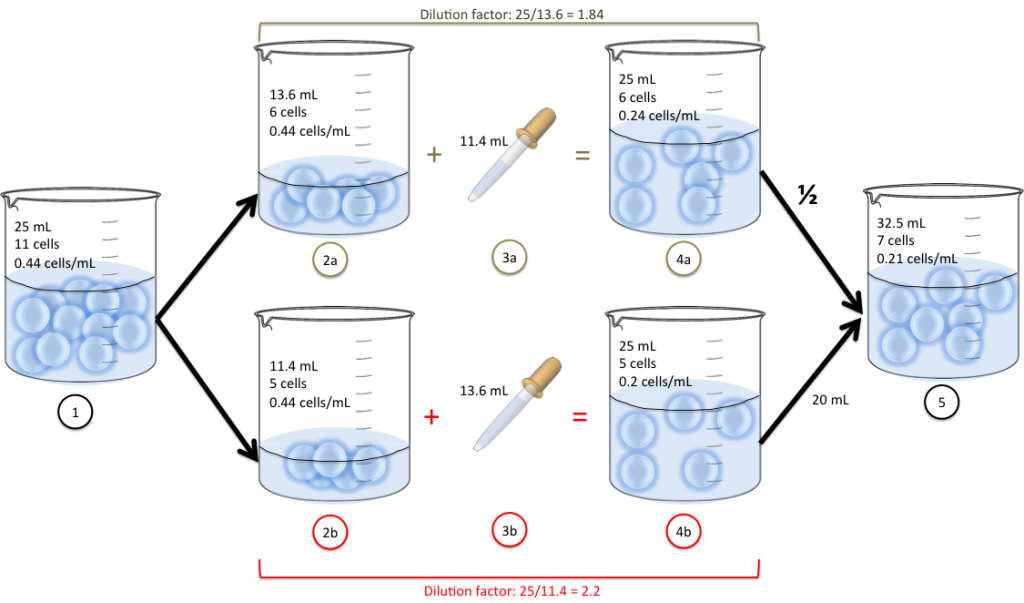
In S:T format: dilution factor = T/S Diluting a sample twiceThis example explains the basic steps to use dilution factors forward and backward. Using them forward means finding the cell density after all the dilutions are performed, starting from the original solution.
- Parallel dilution is the dilution of a solution with equal quantity of the same solvent with which the solution is made. E.g., 1mL of 100µg/ml strength aqueous solution can be diluted to 2mL of.
- Direct dilution vs serial dilution method The AZ researchers generated their range of compound concentrations using two different techniques. In the first instance, they performed serial dilutions with 5% DMSO as the diluent. They also generated a concentration gradient with a direct dilution using the Labcyte Echo system.
Serial dilutions are made by making the same dilution step over and over, using. The points up at one end and having just the last point way far down the scale.
Using them backwards means finding out the original cell density, starting from the most diluted one. Remember this is only an illustration example (it’s impossible you’ll have exactly 11 cells in a beaker and they will definitely not be this big).

We have 11 cells in a beaker suspended into 15mL of water. We add 10mL of water to the beaker. We now have 11 cells in the beaker into 25mL of water. We add an extra 15mL of water to the beaker. We end up with still 11 cells in the beaker but they’re suspended into 40mL of water.Let’s do the calculations forward:The cell density of 1 is 11 cells / 15mL water = 0.7333 cells/mL. We want to find the cell density of 3 without redoing the calculations with cells, and using the previously calculated cell density. The final volume is 25mL and the initial volume is 15mL, so the dilution factor is 25/15 = 1.6667 (keep all your trailing sixes for accuracy).
Advantages Of Serial Dilution
We can now apply it to the original cell density: 0.73 / 1.6667 = 0.44 cells/mL; and we can check it using the original method: 11 cells / 25mL = 0.44 cells/mL.Same thing for the dilution from 3 to 5: the cell density of 3 is 0.44 cells /mL. The dilution factor in this step is 40mL / 25mL = 1.6.
We divide the cell density by the dilution factor and we get: 0.44 / 1.6 = 0.275 cells/mL. Double checking: 11 cells / 40mL = 0.275 cells/mL 🙂.